According to the Department of Statistics Malaysia, the national crime index recently rose by 3.2 percent, prompting a massive shift in how Klang Valley homeowners prioritise security.
We hear the same question every day across our installation sites: Wired vs Wireless CCTV: Which Is Better for Malaysian Properties?
Choosing between a wired and wireless CCTV system is a critical decision that impacts your daily peace of mind. Both options have clear strengths and weaknesses.
This guide breaks down the performance data behind both technologies. You will see exactly how they handle local conditions and discover the right choice for your home.
Signal Reliability in Tropical Weather
Malaysia experiences intense monsoon seasons with annual rainfall regularly exceeding 2,500 millimetres.
This tropical climate is the single biggest factor that separates how these security systems perform here compared to temperate countries.
Wired CCTV Reliability
Wired systems transmit video through physical cables, and we highly recommend using Cat5e or Cat6 ethernet lines for all IP camera installations.
Because the signal travels through a shielded cable, it remains completely unaffected by rain or humidity, meaning the video quality stays perfectly constant during a severe thunderstorm or a clear afternoon.
A physical cable connection guarantees 100 percent signal transmission regardless of external weather conditions or nearby electronic interference.
Wireless CCTV Reliability
Wireless cameras rely on WiFi signals to transmit video to a base station or cloud server.
We often see significant signal drop-offs in typical Malaysian terrace houses.
Thick brick walls and metal roofing extensions severely block standard 2.4GHz WiFi frequencies.
- Thick reinforced concrete walls
- Metal awnings over car porches
- Extended distance to the back gate
- Network congestion from neighbouring routers
A wireless camera positioned far from the home router often struggles to maintain a steady connection.
Installation Complexity
Wired Installation
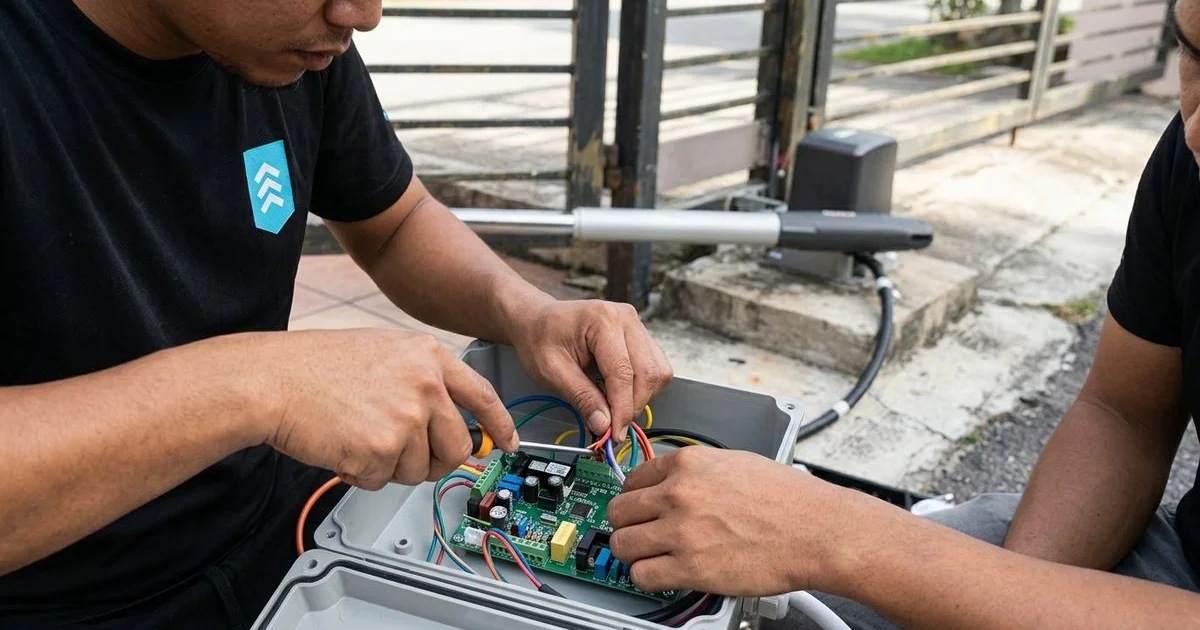
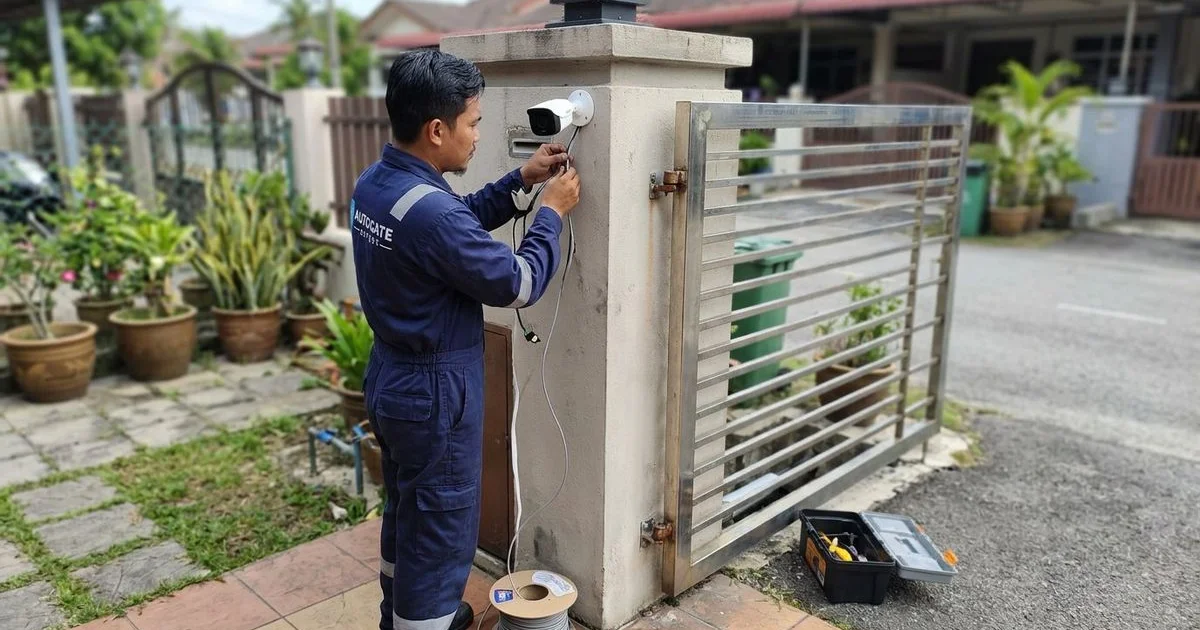
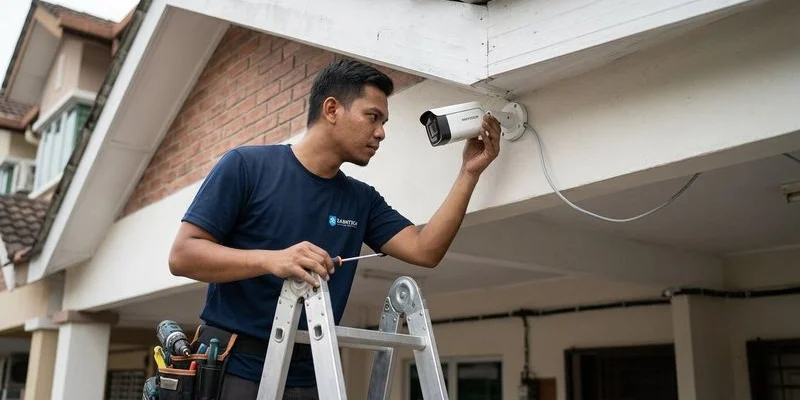
Wired CCTV installation requires running cables from each camera location back to a central Network Video Recorder (NVR).
We usually need a full day to install a complete 4-camera wired package because installers must route cables through the ceiling void and set up PVC conduit trunking along exterior walls.
The major upside is the absolute lack of connectivity maintenance once the durable cables are in place.
- Zero WiFi password management
- No router reboot requirements
- Immunity to radio frequency jamming
- Consistent power delivery
You never need to worry about changing settings on your phone just to keep the cameras recording.
Wireless Installation
Wireless cameras from popular consumer brands like TP-Link Tapo or EZVIZ are dramatically easier to set up.
We love how quickly homeowners can secure an indoor space, as most WiFi models come with a simple mounting bracket and a single power adapter.
An enthusiastic homeowner with basic DIY skills can complete a 4-camera wireless installation in under two hours.
- Secure the mounting bracket
- Connect the dedicated power supply
- Scan the device QR code via mobile app
- Enter your home WiFi credentials
Truly wire-free cameras do exist and use rechargeable batteries, but these specific models require frequent manual recharging every two to four months depending on motion trigger frequency.
Wired vs Wireless CCTV: Which Is Better for Malaysian Properties? A Cost Breakdown
The cost difference between wired and wireless hardware has narrowed considerably in 2026.
We advise clients to look beyond the initial purchase price, as wired packages still command a higher initial cost due to professional installation labour.
While wireless units appear highly affordable upfront, mandatory cloud storage subscriptions quickly inflate the long-term price.
| System Component | Wired System (Hikvision/Dahua) | Wireless System (Tapo/EZVIZ) |
|---|---|---|
| 4x Security Cameras | RM400 to RM1,200 | RM600 to RM1,600 |
| Central Hub (NVR / Base) | RM300 to RM800 | RM200 to RM500 (Optional) |
| Storage Solution | RM200 to RM500 (1TB-4TB HDD) | RM15 to RM50 (Monthly Cloud) |
| Installation & Cabling | RM450 to RM900 | Free (DIY Install) |
| Estimated Upfront Cost | RM1,350 to RM3,400 | RM800 to RM2,100 |
After calculating three years of ownership, the total financial outlay for both technologies is strikingly similar.
Night Vision Quality
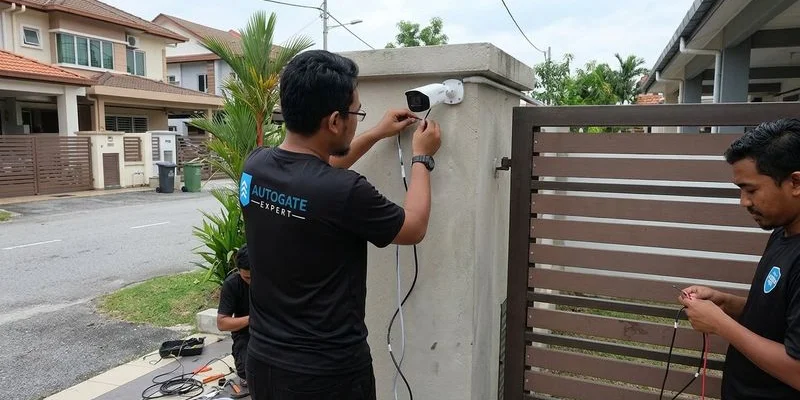
Both security types offer infrared night vision capabilities, but wired cameras generally hold a significant edge in low-light performance.
We always highlight that wired Power over Ethernet (PoE) cameras draw stable, continuous voltage through their data cable.
This consistent power supply feeds stronger infrared LEDs, allowing a standard wired camera to easily illuminate objects 30 to 50 metres away while comparable wireless models fade at 15 metres.
- Captures accurate vehicle colours in the dark
- Identifies specific clothing details of intruders
- Performs exceptionally well along deep bungalow driveways
- Removes the washed-out effect of traditional infrared
Premium wired options now utilise advanced colour night vision technology like Hikvision ColorVu.
Built-in spotlight features on wireless models produce excellent results but can shine intrusively into a neighbour’s window, making the superior infrared range of a wired camera the best choice for a long Malaysian car porch.
Storage Options: NVR vs Cloud
NVR (Network Video Recorder)
Wired systems typically record footage directly onto a local NVR unit equipped with specialised surveillance hard drives like the Seagate SkyHawk or WD Purple.
We regularly install 4TB drives that easily hold 30 days of continuous 1080p footage from four separate cameras.
- Zero monthly subscription fees
- Independent of internet outages
- Instant video playback speeds
- Massive storage capacities
The primary vulnerability is physical theft or damage, meaning you lose all your video evidence if a burglar steals the physical NVR box.
Cloud Storage
Wireless security cameras upload their video files to remote internet servers via services like EZVIZ CloudPlay or Tapo Care.
We must warn homeowners about the heavy bandwidth requirements of continuous cloud recording, as uploading high-definition video demands a very stable internet line.
According to Unifi’s 2025 performance guidelines, standard 100Mbps fibre plans typically offer only up to 50Mbps of upload speed.
A hybrid security design offers the safest storage strategy by recording continuous high-definition video to a hidden local NVR while sending short, motion-triggered clips directly to the cloud.
Weather and Heat Resistance
Malaysia’s intense average daytime temperature of 32 to 35 degrees Celsius degrades electronics rapidly.
We prioritise wired outdoor cameras featuring certified IP66 or IP67 weatherproof ratings because these industrial-grade units utilise heavy metal housings that dissipate internal heat effectively.
High humidity levels above 80 percent cause dangerous internal condensation in poorly sealed plastic units.
- IP67 water and dust resistance certification
- Metal alloy casing for rapid heat dissipation
- UV-resistant coating on the external lens
- Wide operating temperature range
Direct afternoon sunlight on a dark-coloured plastic camera can push its internal temperature beyond 60 degrees Celsius, drastically shortening the product lifespan.
WiFi Bandwidth Requirements
Network bandwidth consumption remains the most overlooked factor when buyers select wireless security cameras.
We calculate that a standard 4-camera wireless setup easily consumes 8 to 16 Mbps of continuous upload bandwidth.
Security reviews from Tech Critter highlight that upgrading to 2026 model 4K wireless cameras like the SriHome SH072 doubles this network drain.
- Buffering issues during Netflix streaming
- High ping spikes during online gaming
- Slow photo uploads to social media
- Dropped calls on WhatsApp or Zoom
This continuous data transfer directly impacts your family’s daily internet experience.
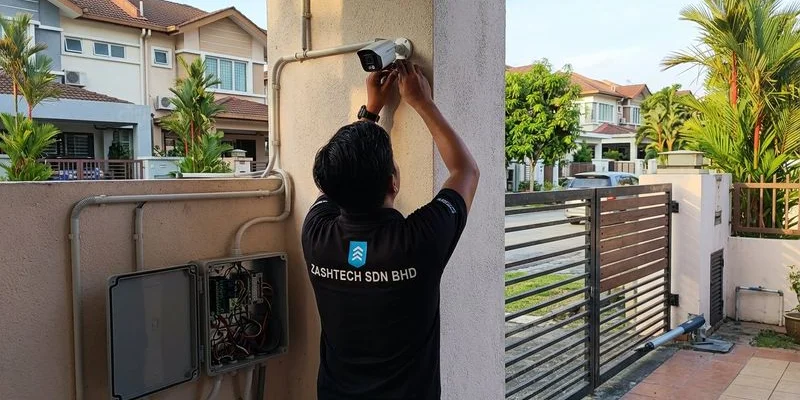
Wired IP cameras bypass your WiFi entirely and communicate directly with the central NVR via their own dedicated cables, keeping your Unifi or Time broadband completely free for household enjoyment. Many homeowners pair a wired CCTV setup with a sliding autogate installation for comprehensive perimeter security.
Our Recommendation
When asking Wired vs Wireless CCTV: Which Is Better for Malaysian Properties?, the answer depends entirely on your infrastructure and security goals.
We strongly recommend a wired security system as the primary defence layer for Malaysian landed properties.
The perfect signal reliability, superior night vision range, and zero impact on your home internet make physical cables the smartest long-term investment.
Wireless units serve brilliantly as supplementary interior cameras or flexible monitors for temporary spaces, but wired systems remain the undeniable standard for serious perimeter security.
Get Professional Advice from Autogate Expert
Choosing the perfect surveillance package requires a thorough understanding of your unique property layout and existing network infrastructure. As a trusted autogate and security specialist, we combine gate automation with surveillance for complete protection.
We assess your specific blind spots in person before designing a custom security map.
- Identifying vulnerable entry points
- Testing existing WiFi signal strength
- Measuring exact cable run distances
- Recommending optimal camera angles
The technical team installs professional wired frameworks and integrates flexible wireless units to build a complete hybrid defence system.
Contact Autogate Expert today to schedule a free site assessment and secure your home with absolute confidence.
Related Service: Autogate Repair

Written by
Mohamad Syauqy Amin
Founder & Lead Technician
Certified Autogate Installer
With over 15 years of experience in autogate systems, Syauqy has installed and repaired thousands of gates across Selangor and Kuala Lumpur.