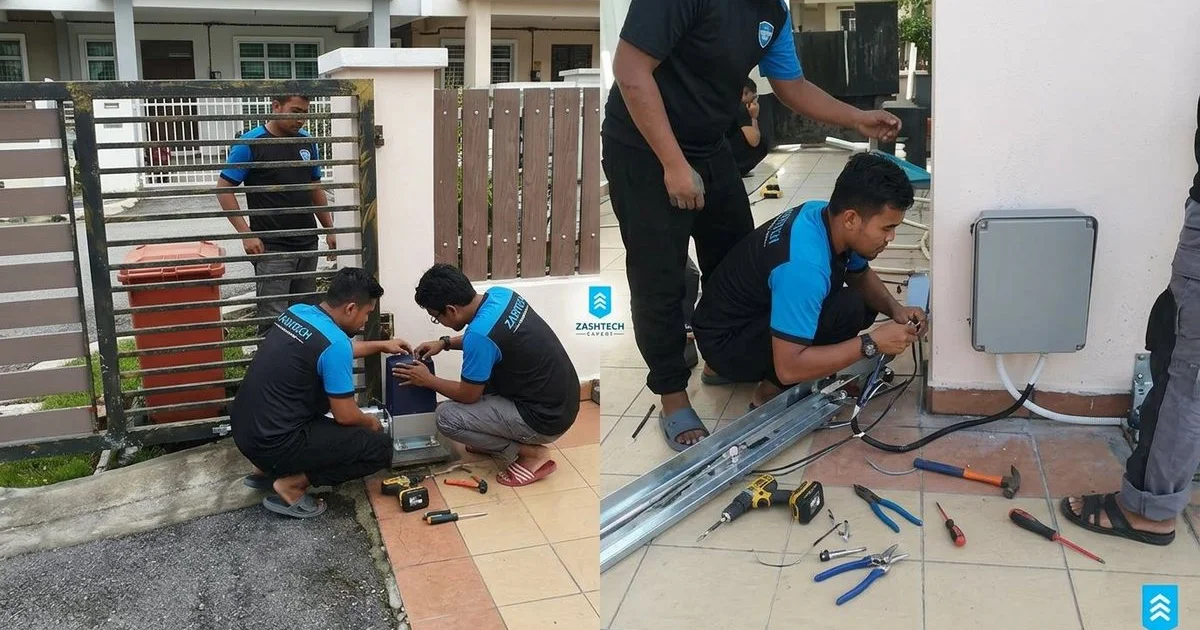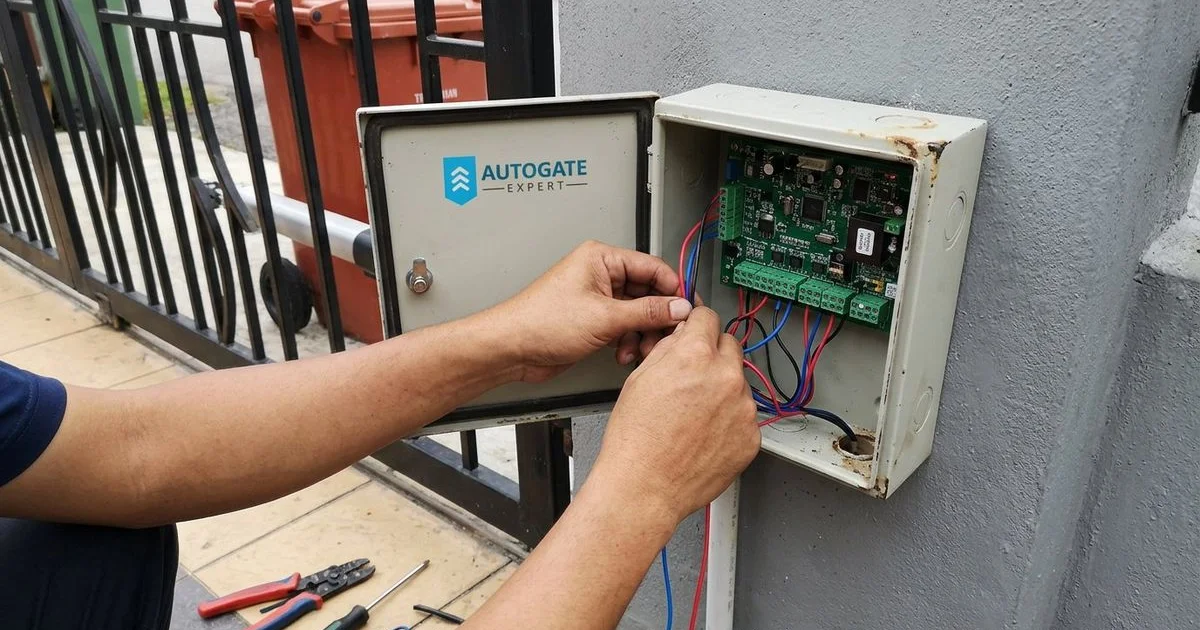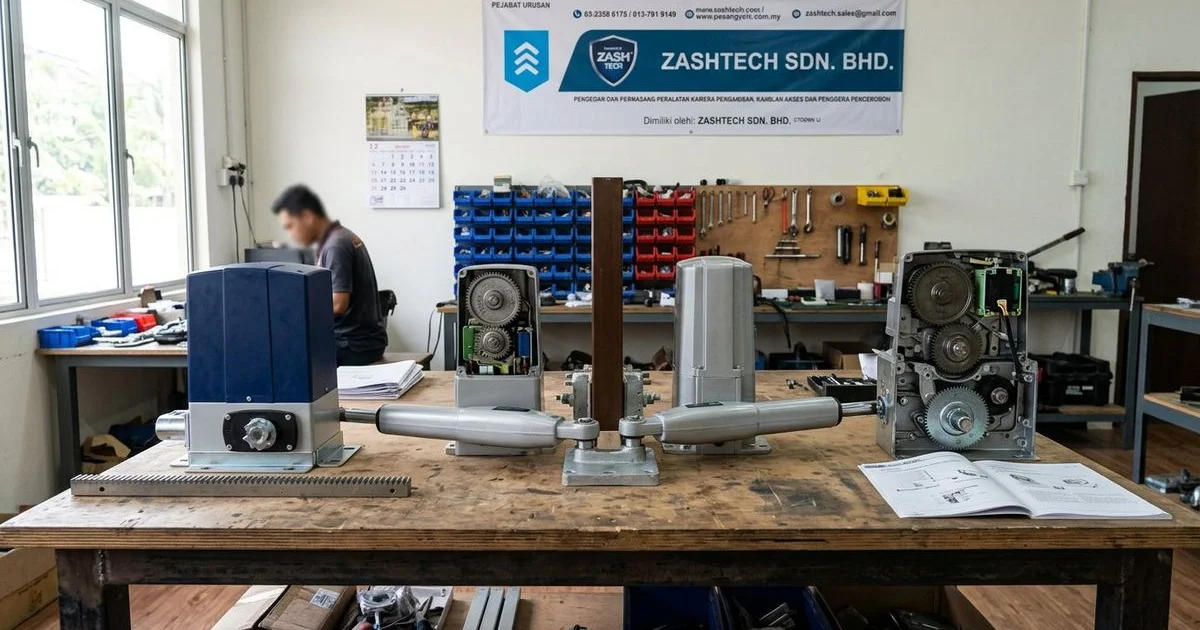
You know how frustrating it is when a brand-new setup starts acting up after just a few months. Understanding why concrete pillar reinforcement matters for your autogate installation is the key to preventing this.
Our professional service team has seen this scenario play out countless times across the Klang Valley.
Many property owners focus entirely on choosing the right motor. They only discover later that weak columns are causing major alignment issues.
We know that the condition of your structural foundation directly impacts motor lifespan and daily reliability.
Let’s look at the data, what it’s actually telling us, and explore a few practical ways to respond.
What Do Gate Pillars Actually Do?
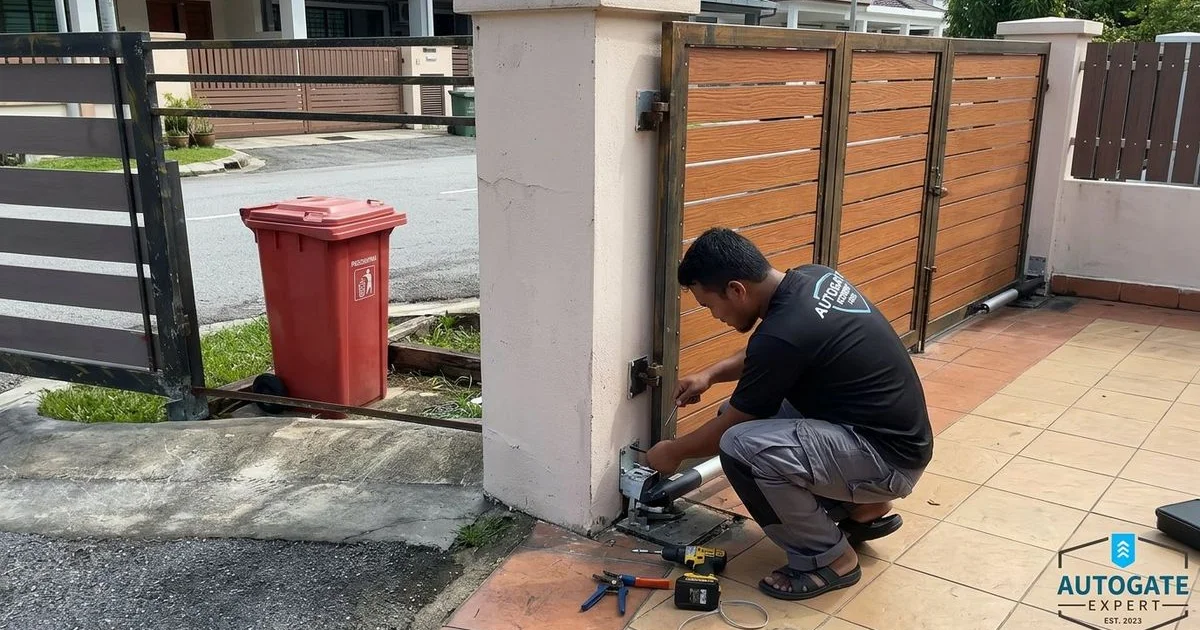
Gate pillars serve as the structural foundation for your entire entry system. They bear the full weight of the physical gate, absorb the vibration from operation, and resist lateral forces. For a sliding autogate installation, the end pillar houses the mounting bracket and must withstand continuous torque.
Our recent field data shows that a heavy residential sliding gate can easily weigh between 500kg and 600kg. This massive weight requires a motor that can generate up to 45 Nm of output torque or 1250 N of thrust force. We see exactly how much pressure this places on the supporting structure every single day.
A standard, unreinforced brick column simply cannot handle that level of continuous dynamic stress. For swing arm systems, both columns support the weight of the leaves and the pulling force of the mechanical arms. Weak supports in either system lead to the exact same result: misalignment, metal grinding, excessive gear wear, and eventual system failure.
Common Problems Caused by Weak Pillars
1. Gate Sagging
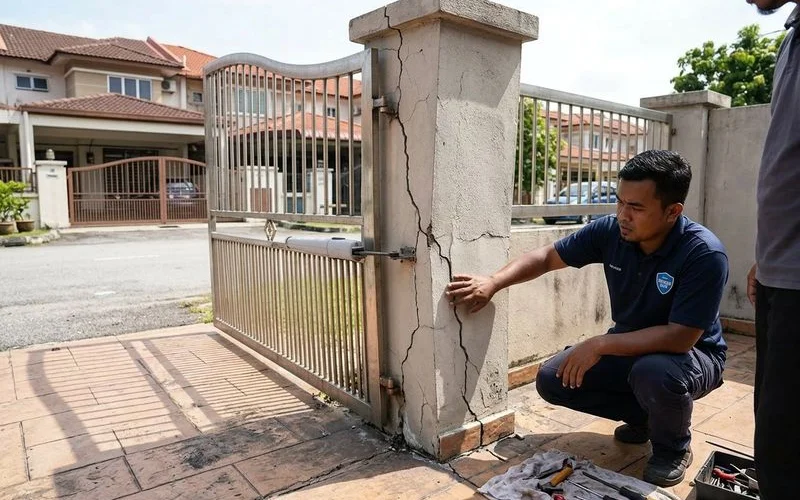
When a support shifts or leans due to insufficient reinforcement, the heavy metal leaf begins to sag on one side. This causes the bottom edge to drag on the ground, creating massive friction. Our technicians frequently repair burnt-out motors or stripped gears caused entirely by this excess drag.
Local autogate repair data from 2026 indicates that fixing a severely sagging gate can cost you between RM 400 and RM 600 in the Klang Valley. We highly recommend addressing a slight lean early before it destroys your expensive drive unit. Ignoring the problem always leads to a much larger repair bill.
2. Motor Bracket Loosening
The main bracket is bolted or welded directly to the concrete surface. If the material cracks or crumbles under the 45 Nm of torque mentioned earlier, the bracket loosens rapidly. We often find that this causes the drive unit to vibrate excessively during operation.
This intense vibration leads to broken mounting bolts, misaligned gear engagement, and costly part replacements. A solid, reinforced core prevents this vibration from shaking the hardware apart.
3. Track Misalignment
For sliding systems, if the end column shifts even slightly, the entire track alignment is compromised. The moving section may derail, jam at certain points, or fail to reach its fully closed position. We have noticed that limit switches also malfunction rapidly when the track is no longer perfectly straight.
4. Safety Hazards
A heavy mechanical door that fails to close properly creates an immediate security gap for your property. Worse, a sagging 600kg metal frame can suddenly drop or jam unexpectedly. Our safety checks confirm that this creates a severe hazard, potentially injuring people or damaging vehicles passing through.
How Pillar Reinforcement Works
Professional reinforcement involves strengthening the existing structure or building a new column with proper specifications. Here is what the process typically includes to ensure long-term stability:
Structural Assessment
The installer inspects the existing columns for cracks, hollow sections, tilting, and structural integrity. We use a standardized tapping test to check for hollow spots beneath the surface. A visual assessment also confirms the vertical alignment and identifies any hidden stress fractures.
Steel Rebar Insertion
For hollow or weak structures, high-yield steel rebar (reinforcement bars) are inserted directly into the core. This critical addition gives the column the tensile strength needed to resist the lateral pushing and pulling forces. We rely on this steel core to prevent the concrete from snapping under heavy loads.
Concrete Filling
After the steel rebar is placed, the hollow cavity is filled with high-grade concrete, typically Grade 30 or above. This specific grade means the cured material can withstand an immense 30 N/mm² of compressive pressure. We use this industrial-strength mixture to create a solid, dense base that fully supports heavy brackets.
Base Footing Expansion
In some cases, the underground base footing needs significant enlargement. A wider and deeper footing distributes the heavy load across a greater surface area. Our installations in areas with soft peat soil require this step to prevent the column from sinking or tilting over time.
A 2024 study by the Construction Research Institute of Malaysia (CREAM) highlighted that soil subsidence in the Klang Valley frequently causes building deformation. We take this local soil data very seriously when designing your underground footing.
Mandatory Curing Time
After pouring, the Grade 30 concrete needs at least 24 to 48 hours to cure properly before any hardware is attached. Rushing this waiting period completely compromises the entire reinforcement effort. We always schedule the final motor attachment after this crucial hardening window has passed.
Understanding Why Concrete Pillar Reinforcement Matters for Your Autogate Installation
Not every property requires a full structural upgrade before an installation. Here are the specific situations where reinforcement is absolutely essential:
- Old terrace houses built before 2000 often have thin, hollow columns not designed for motorized systems.
- Heavy folding or sliding gates exceeding 500kg put massive dynamic stress on the mounting points.
- Visible hairline cracks in the existing masonry clearly indicate underlying structural weakness.
- Previous installations that were removed often leave behind heavily weakened or drilled-out sections.
- Decorative brick columns lack the internal solid core required for holding expansion bolts securely.
- Peat soil areas in Selangor are highly prone to ground subsidence and shifting.
Cost of Pillar Reinforcement
In the Klang Valley area, investing in structural upgrades involves specific baseline costs. We want to be completely transparent about these typical 2026 pricing tiers:
| Type of Service | Estimated Cost Range |
|---|---|
| Basic reinforcement (one pillar) | RM 300 to RM 500 |
| Full reinforcement (both pillars) | RM 500 to RM 800 |
| New solid pillar construction | RM 800 to RM 1,500 per pillar |
While this adds an upfront expense to your project, it is far cheaper than replacing a burnt-out 24V DC motor. We have seen total replacement costs range from RM 800 to RM 1,500. Spending a little on a solid foundation prevents those massive repair bills down the road.
How We Handle Pillar Assessment
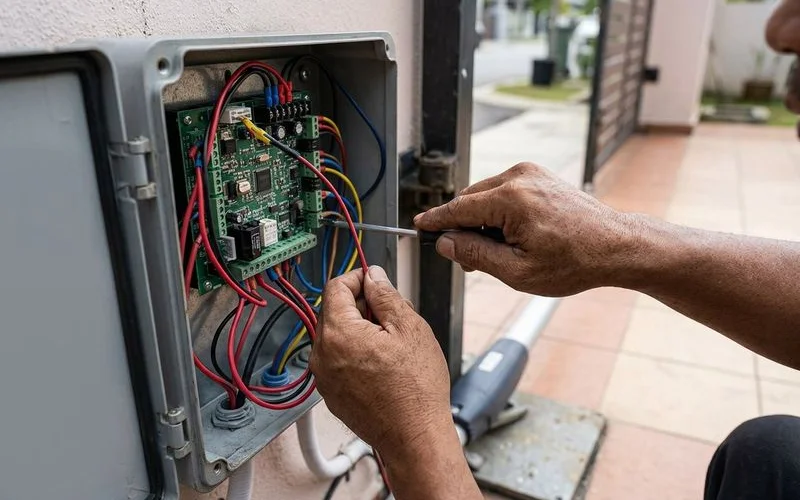
At Autogate Expert, a thorough structural assessment is a standard part of every site visit. Before we quote any installation project, our technicians check several critical factors:
- Material composition: Is it solid concrete, hollow block, or just decorative brick?
- Physical dimensions: Is it wide enough to mount the heavy-duty bracket securely?
- Vertical alignment: Is the column plumb, or has it already started to lean?
- Base condition: Is the footing solid, or is there visible soil erosion around the base?
- Previous modifications: Has the surface been drilled, cut, or patched poorly in the past?
We then include any necessary upgrade costs directly in the initial quotation so there are no surprise fees later. If your setup is in perfect condition, we will tell you honestly. Our team never recommends unnecessary construction work.
Protect Your Investment
A high-quality 24V DC drive system can easily last 5 to 10 years with standard maintenance, but only if the supporting structure is rock solid. Investing RM 500 to RM 800 in a proper concrete core today provides total peace of mind. We highly encourage property owners to view this as an insurance policy for their equipment.
Get Your Pillars Assessed
If you are planning an upgrade or experiencing annoying alignment issues with your existing system, reaching out is the first step. Understanding why concrete pillar reinforcement matters for your autogate installation can save you thousands in future repairs.
WhatsApp us at 018-298 9389 for a free on-site assessment. We will inspect your masonry, calculate your gate weight, and recommend the most effective long-term solution for your property.
Related Service: Sliding Autogate Installation
Written by
Mohamad Syauqy Amin
CEO & Lead Technical Specialist
SSM Registered Business Owner, BestAdvisor Recommended
CEO of Autogate Expert with 10+ years in autogate and security systems.